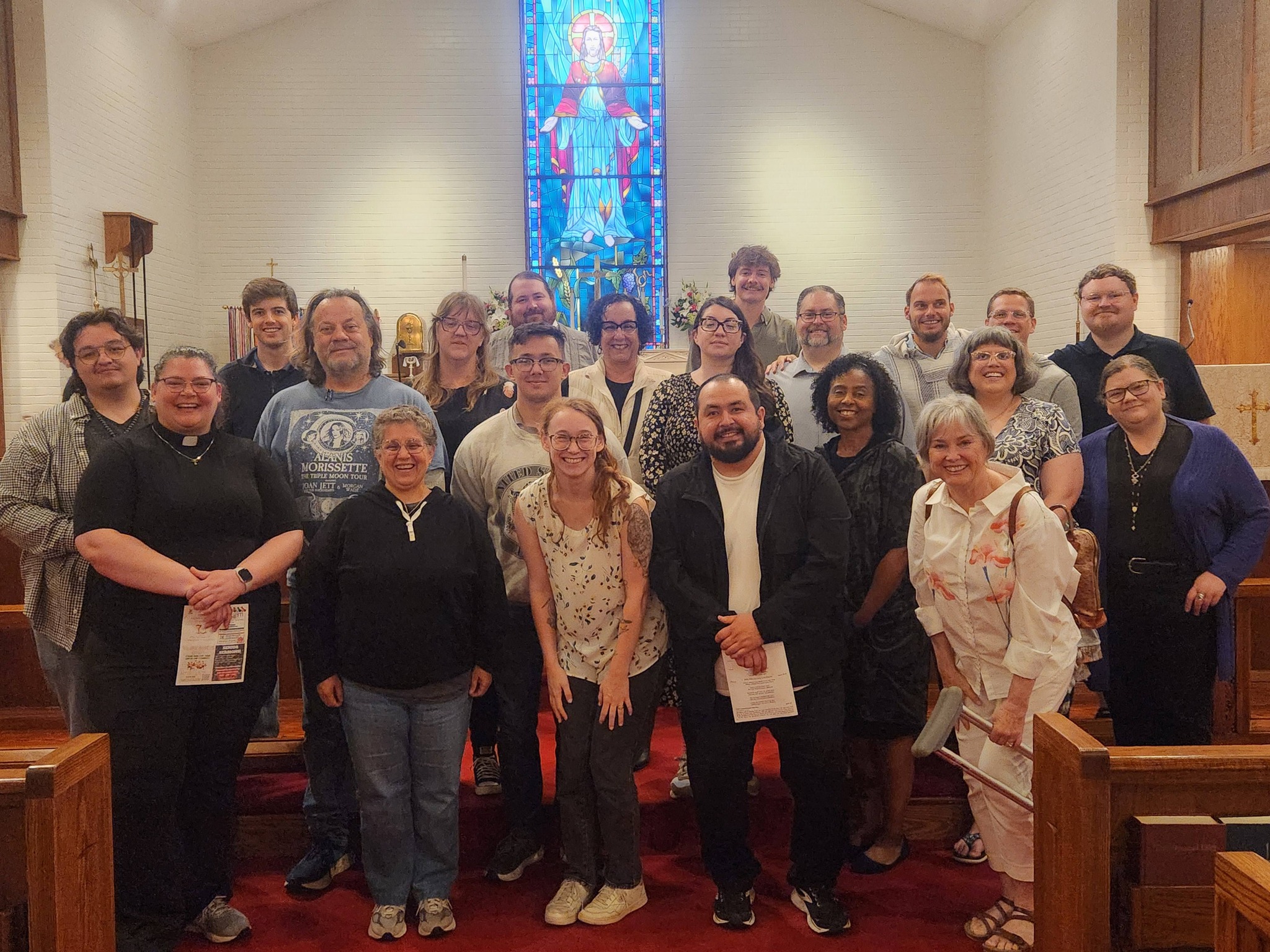
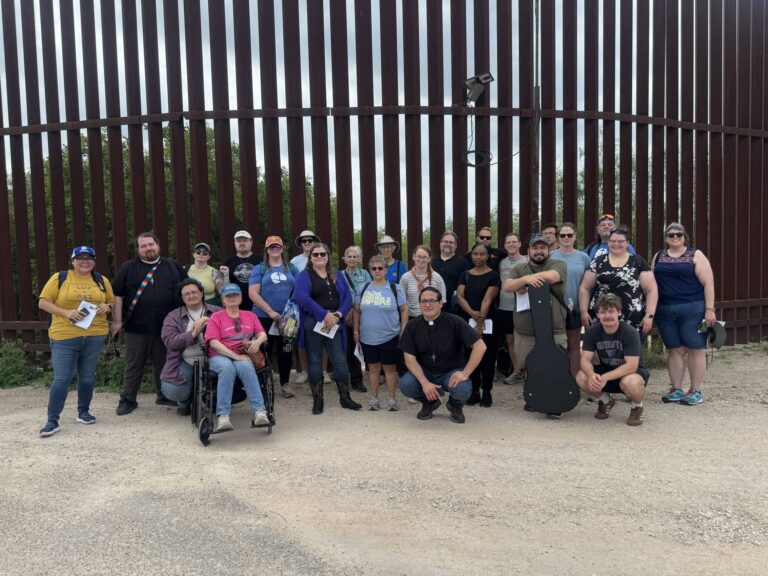
Each year, junior Master of Divinity students from Seminary of the Southwest take part in an immersive border experience that invites them to encounter the complex realities of migration, ministry, and life along the U.S.–Mexico border, called Encuentro. Through visits with community organizations, conversations with those directly impacted by immigration policy, and shared reflection with classmates and faculty, the journey becomes a powerful opportunity for students to deepen their understanding of faith, justice, and the Church’s role in the borderlands.
Experience this important trip through the Rev. Nancy Frausto’s, Director of Latinx Studies and Lecturer in Multicultural Ministry, reflections from each day.
Encuentro: Searching in the Borderland — Day 1
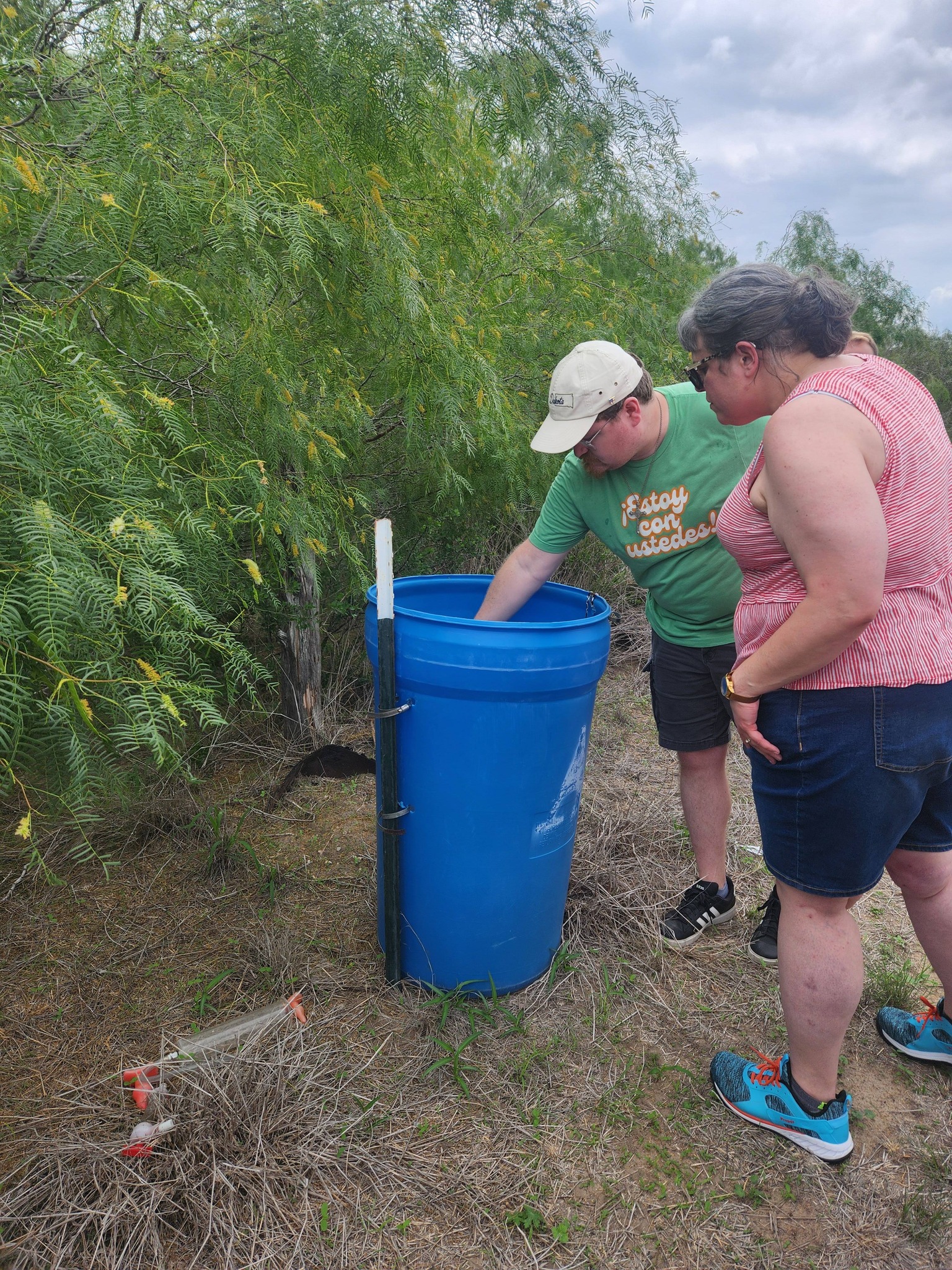
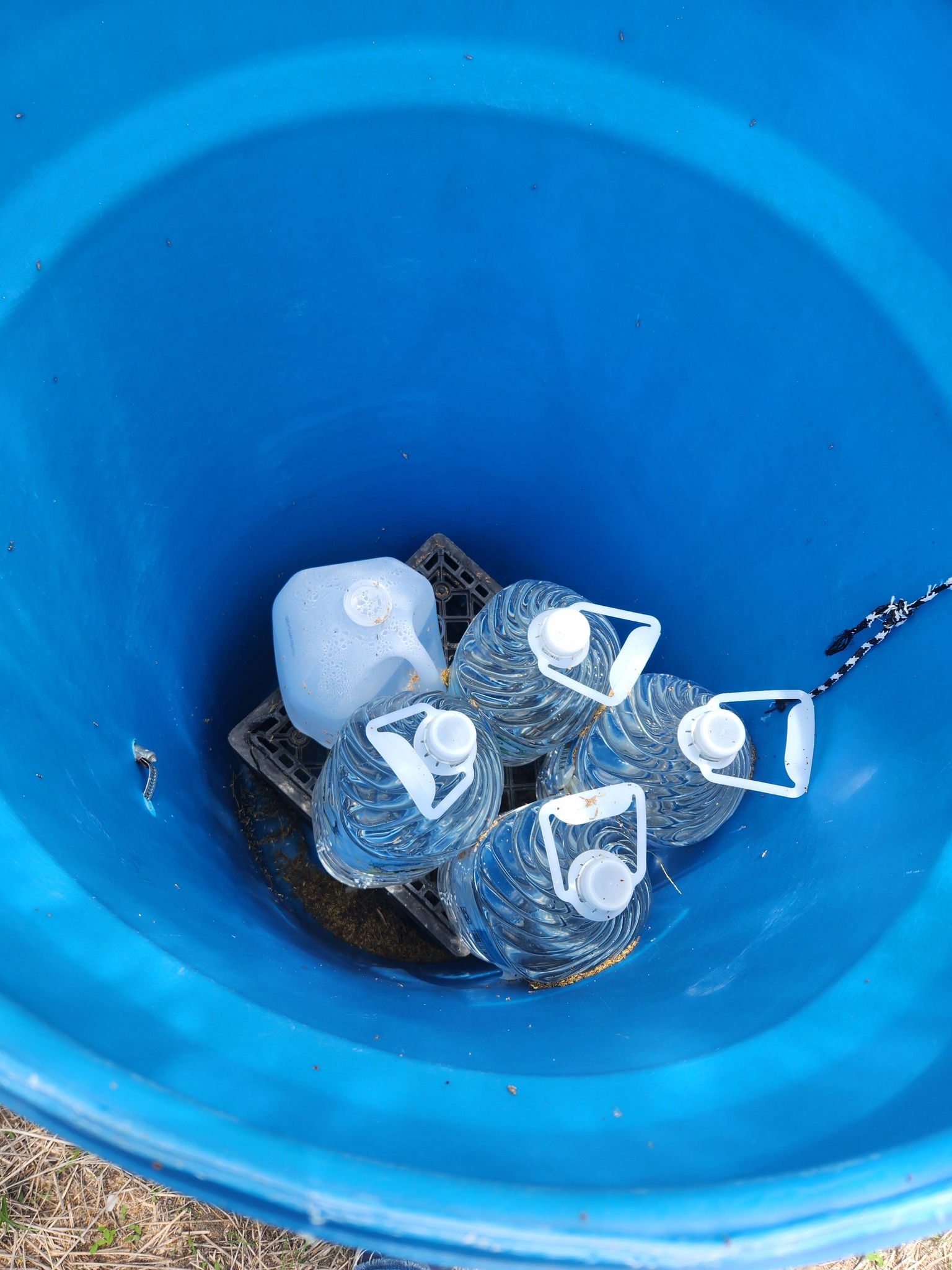
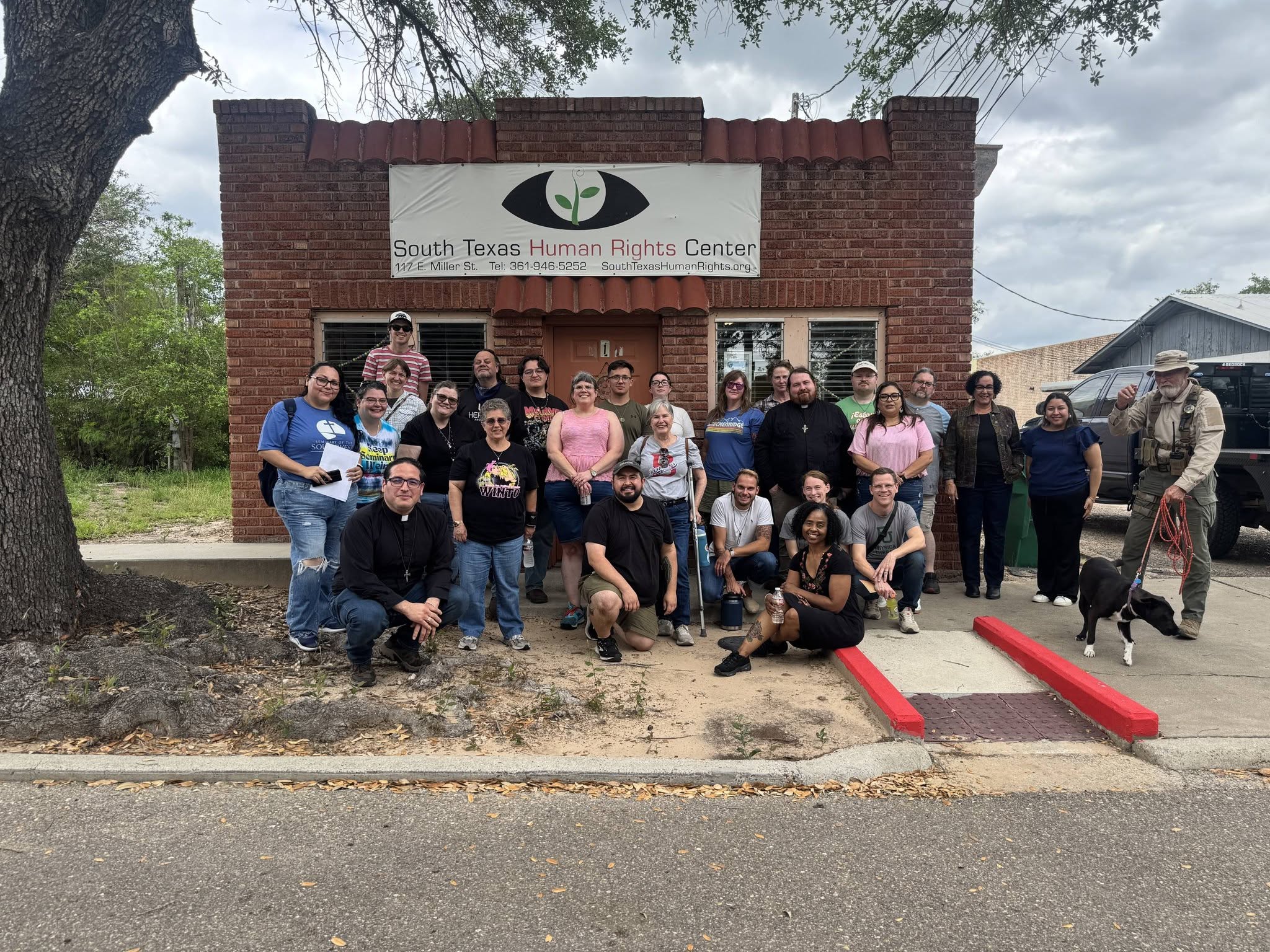
After long hours on the road, we arrived and were welcomed by Padre Cruz Hector Torres and Nora Salinas, forensics coordinator with the South Texas Human Rights Center. She led us out to the water stations scattered across the harsh terrain of Brooks County and the surrounding region. There, our students encountered a ministry of life-saving compassion: simple blue barrels filled with water, placed in the desert to prevent the deaths of those forced to make the journey on foot. Each station is both an act of resistance against indifference and a quiet proclamation that migrants lives matters.
From the desert, we made our way to the Center’s office, where we met volunteer deputy Don White, locally known as the “Bone Collector.” With deep humility and unwavering commitment, Deputy White recovers the remains of those who have perished in the desert and works to help identify them. His work restores dignity to the dead and offers grieving families the possibility of closure; the sacred act of laying their loved ones to rest.
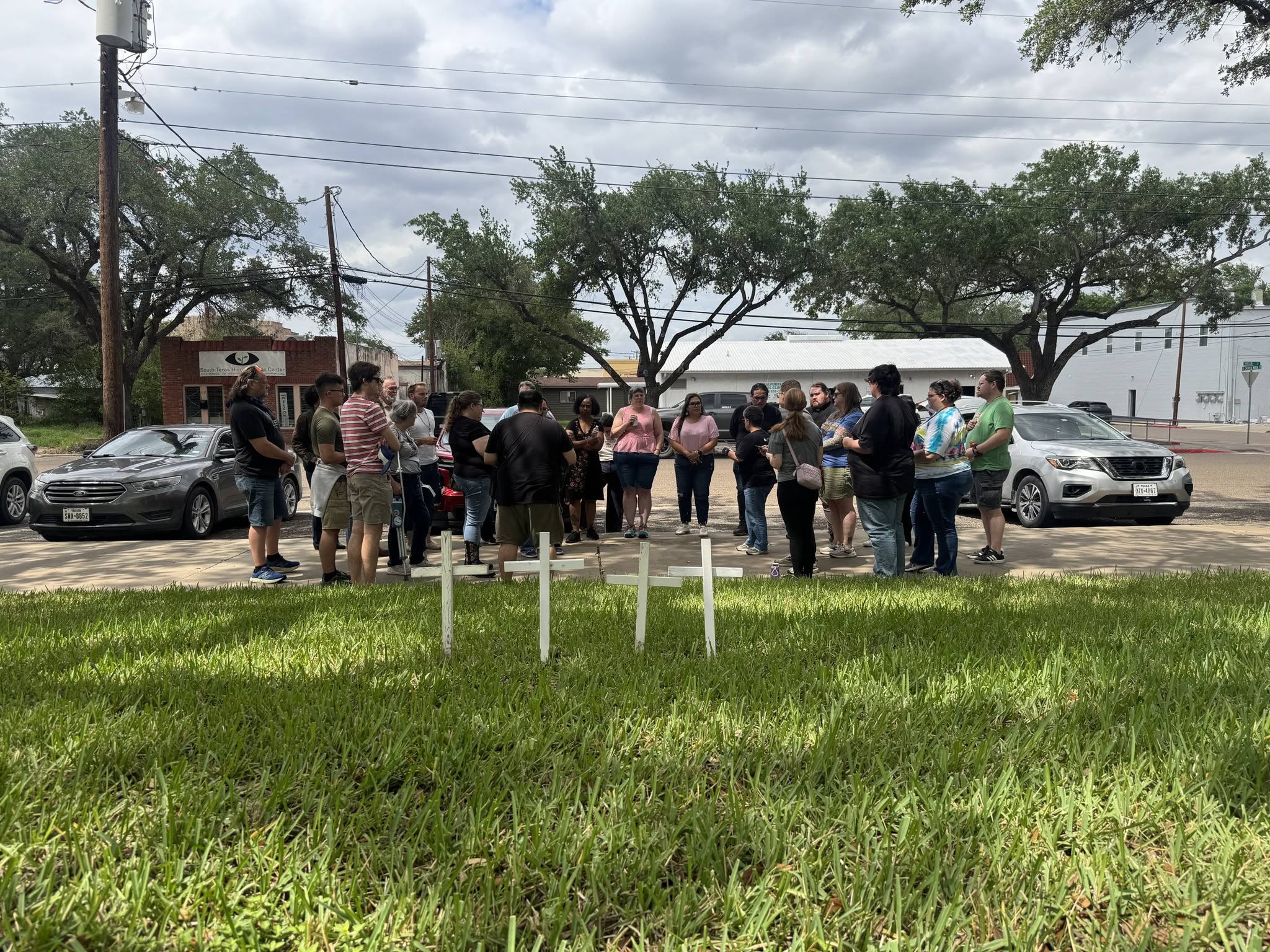
It was a sobering and holy day. We closed our time together in prayer, remembering by name and spirit those whom Nora herself had helped recover and identify. The weight of their stories stayed with us.
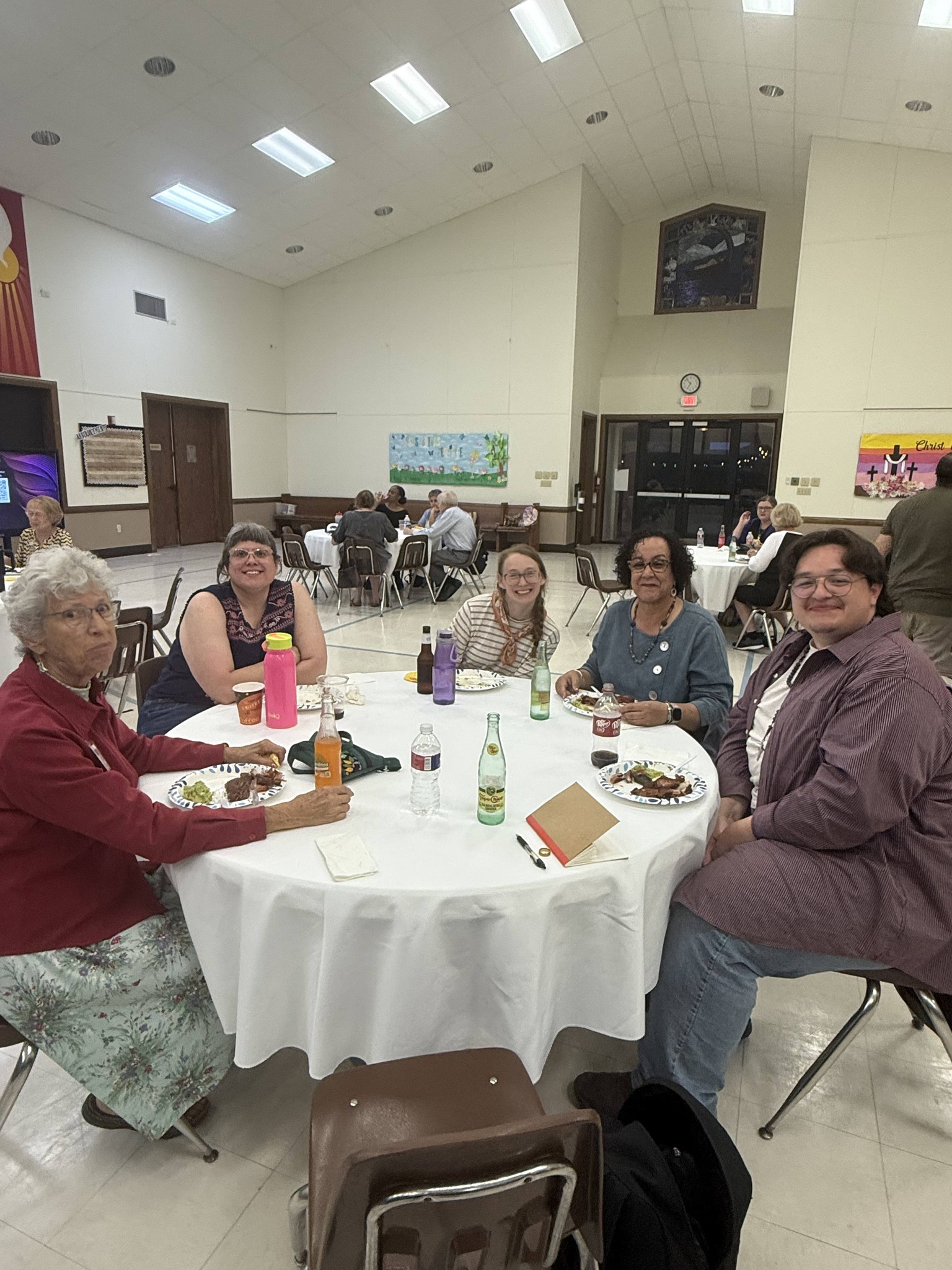
And yet, even in the heaviness, there was space for joy and community. We ended the day gathered around good food, and our very own Daniel TenSpot Weaver lifted our spirits by serenading us with mariachi.
Encuentro: The Work in the Borderlands — Day 2
It was a heavy day, one that held together service and sorrow, learning and prayer, the weight of stories and the quiet resilience of the people who carry them. We spent the day listening closely to the realities of border communities, where organized crime, poverty, and a fractured immigration system shape daily life in ways that are both visible and painfully hidden.
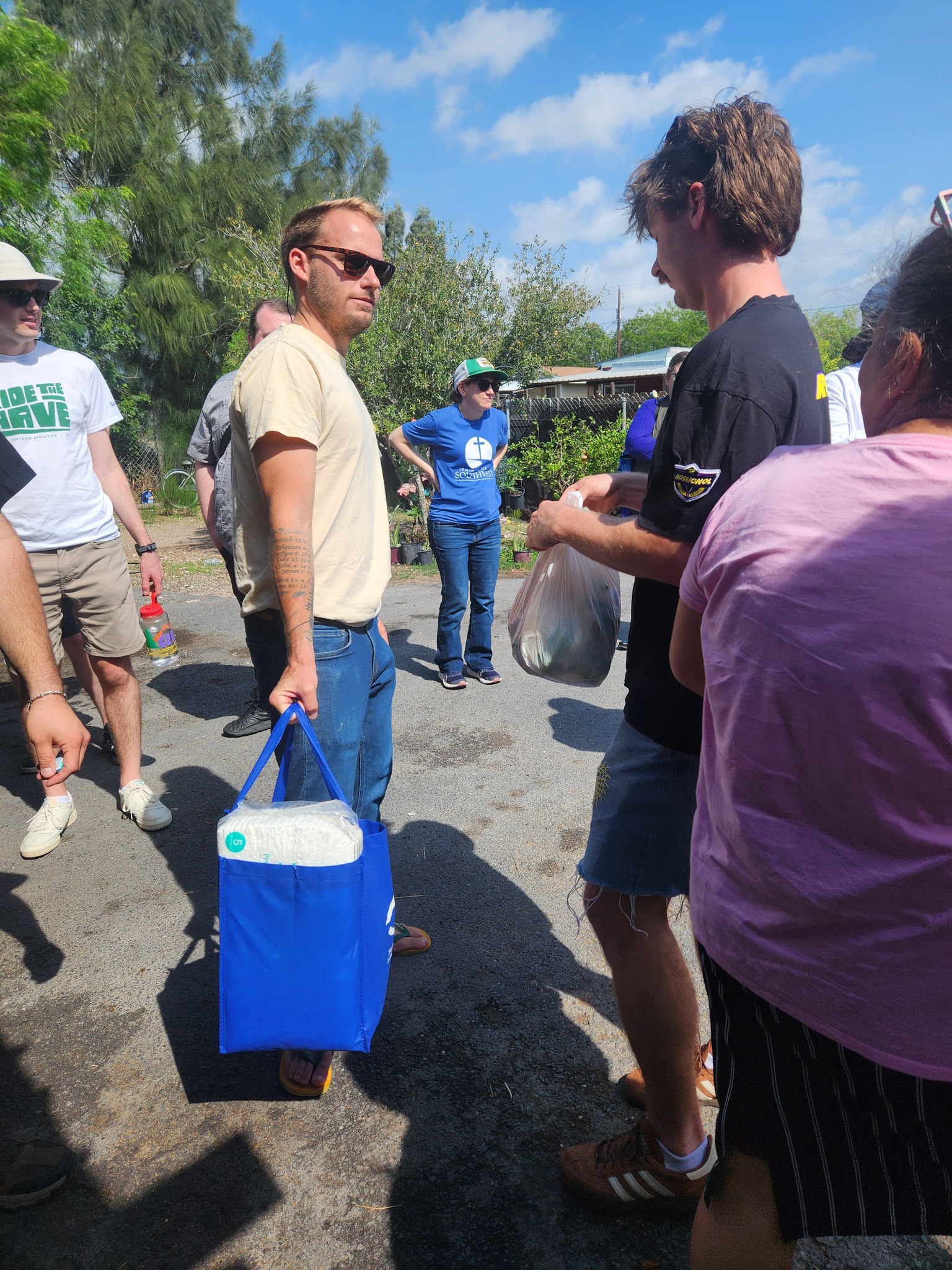
We began by visiting the colonias, unincorporated communities along the U.S.–Mexico border, which often lack basic infrastructure, including clean water, sewage systems, paved roads, and reliable electricity. These are places where families build homes piece by piece, often on land they own but without access to the services many take for granted. And yet, they are also places of deep community, strength, and dignity.
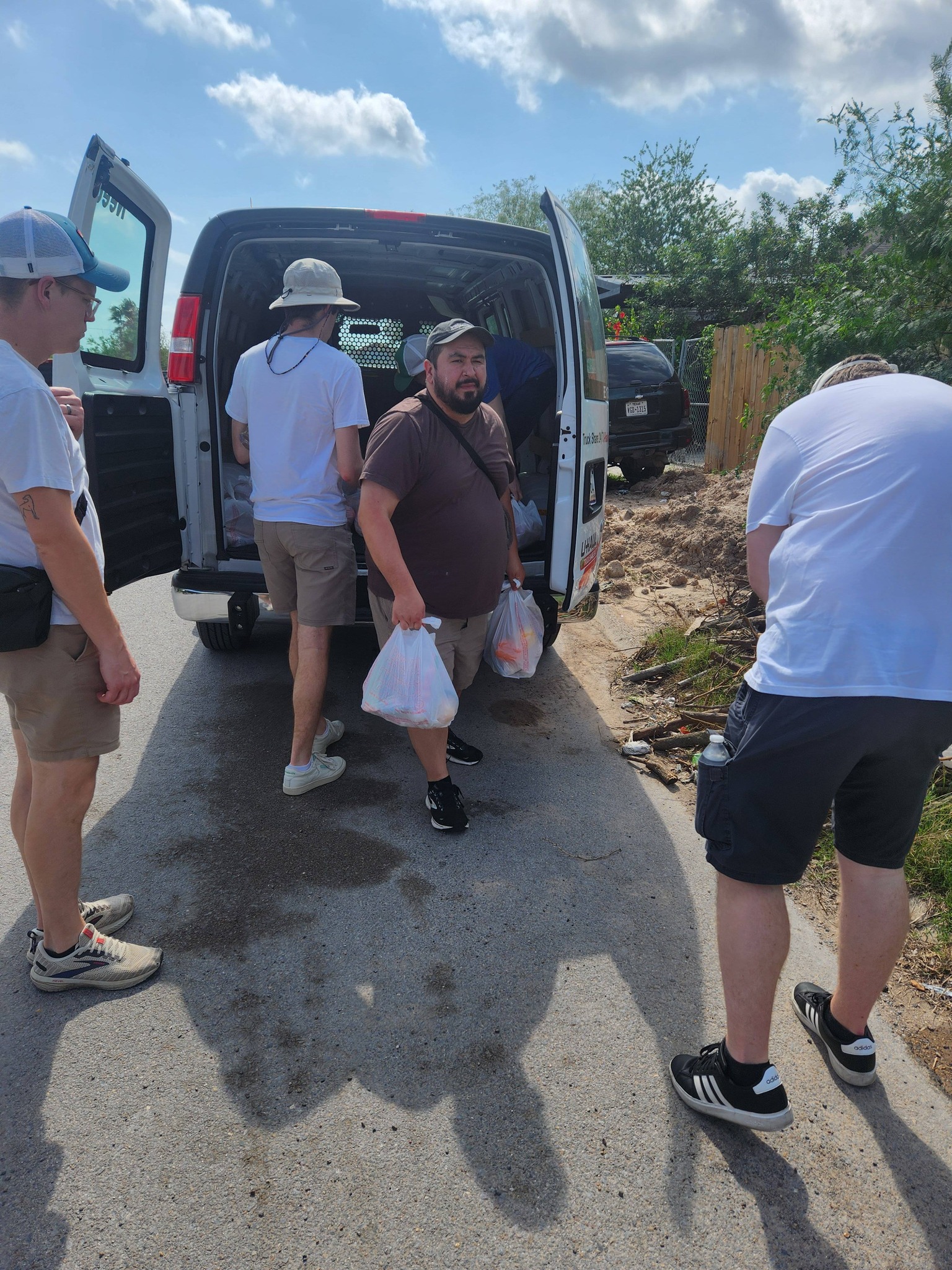
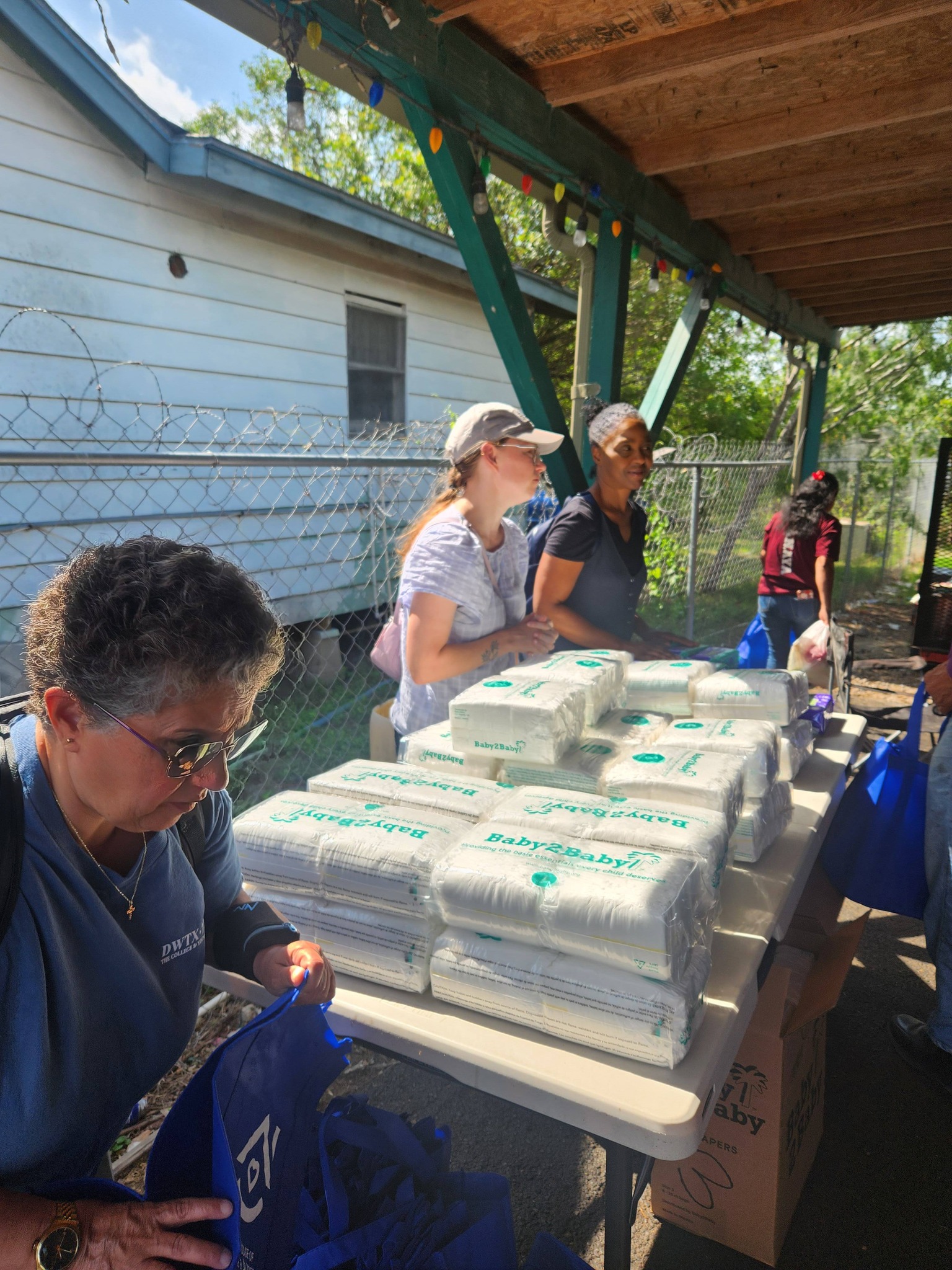
There, we witnessed the extraordinary ministry of Cali Fernández and the work of House of Love and Justice. Cali has committed her life to walking alongside families in the colonias, building trust, showing up consistently, and offering what is needed most: food, diapers, education, and above all, relationships. Her work is not charity from a distance; it is accompaniment, rooted in love and presence.
But even in these sacred acts of care, there is risk. ICE has been known to appear in these communities, sometimes targeting the very spaces where people gather for support. Cali shared that in the past, ICE agents had followed her, hoping to detain those who came seeking help. This morning, by the grace of God, she greeted us with the words, “No HIELO sightings today.” Still, contingency plans were in place to protect both the residents and our students should ICE show up.
As we walked the dusty roads of the colonia, Cali paused and pointed to an empty lot. She shared her dream of one day purchasing that land to build a community center. We stood there together, holding that vision with her, praying over her and the empty lot.
Later, we gathered for a roundtable conversation with Elkét Rodríguez, an immigration attorney, and Rogelio Núñez, a community organizer. They offered us a sobering yet clarifying overview of the history of South Texas and the immigration system as it stands today. What became clear is that the brokenness we witness is not accidental it is the result of policies and structures that have functioned exactly as they were designed to.
We ended the day listening to stories of lives shaped and, at times, shattered by organized crime along the border. Stories of loss, fear, and survival.
Throughout it all, questions echoed among us: What is God asking of us as people of faith? How do we respond to such deep injustice? How do we care for communities carrying so much trauma and unmet need? Cali’s words stayed with us: When you see the need in the world, as people of faith, you show up….no excuses!
It was a heavy and holy day. We found comfort in one another, in shared meals, in laughter that broke through the tension, in tears that did not need explanation, and in prayers that held more than words could express. Together, we continued to listen for God’s call in the midst of it all. Keep sending those prayers. We need them.
Encuentro: The Wall, the River, and a Deep Faith in the Borderlands — Day 3
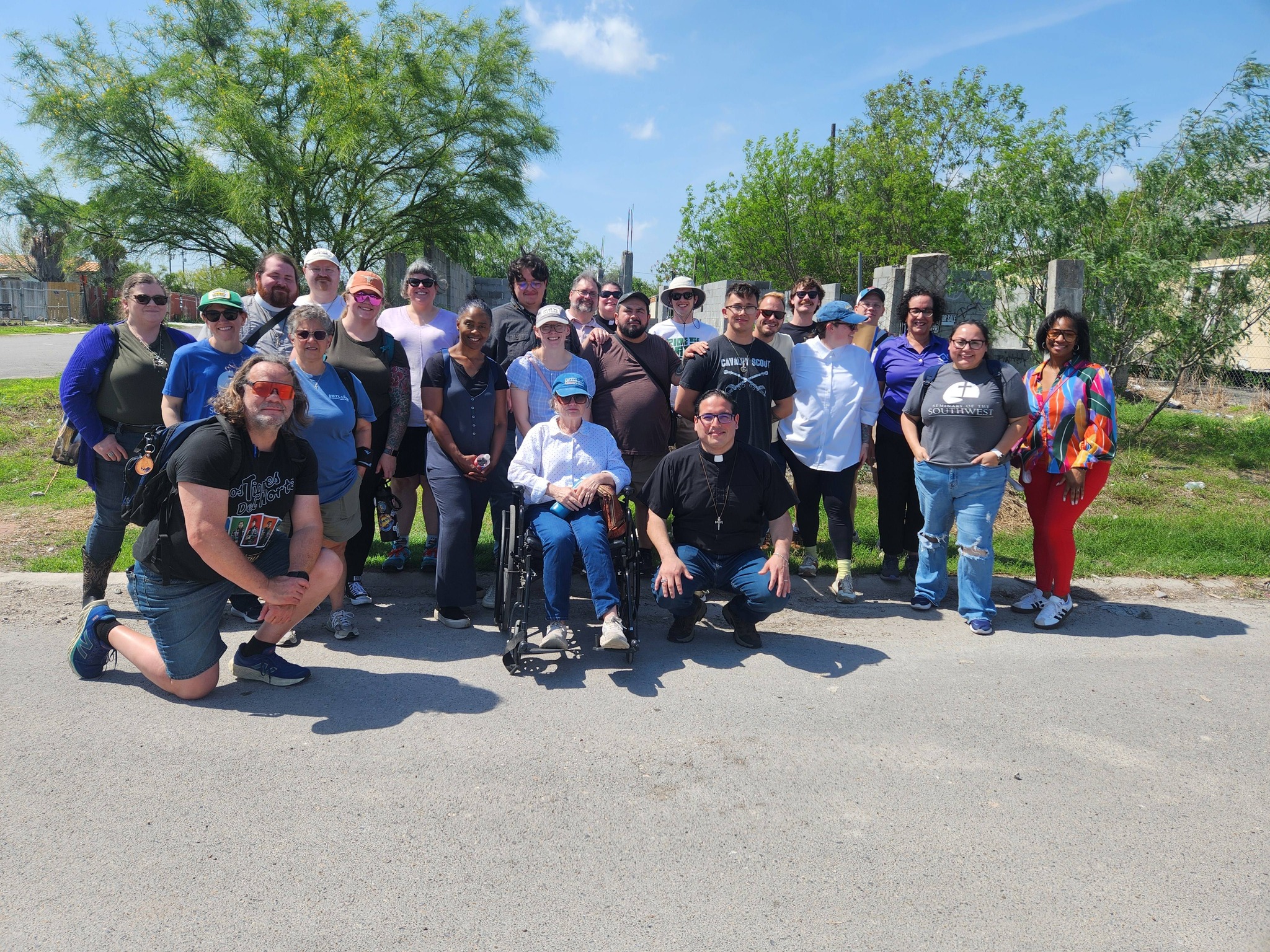
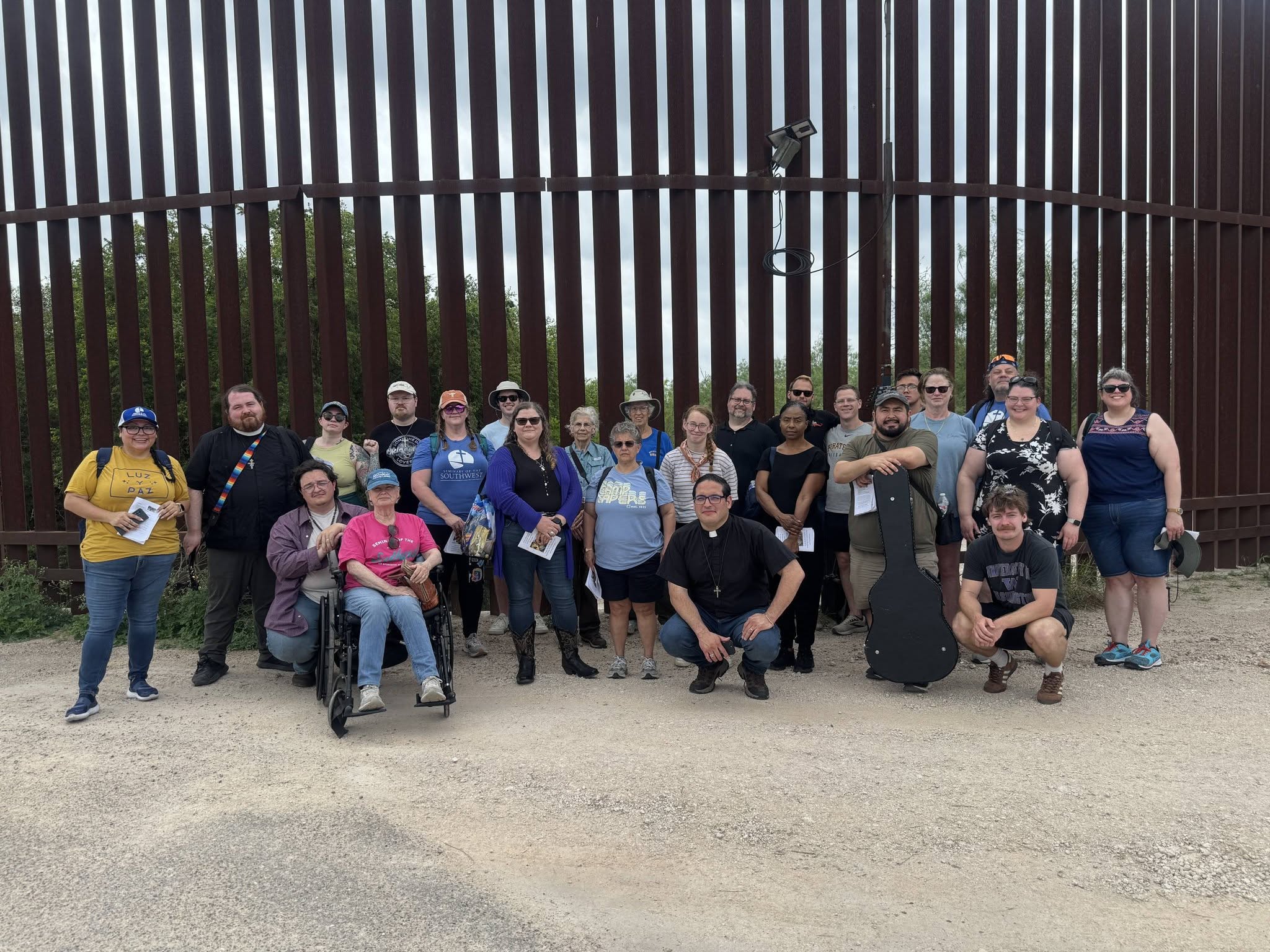
To stand at the border is to confront more than a wall. It is to encounter layered realities of land, water, politics, power, fear, and longing. In the Borderlands, even the river tells stories: of those forced to flee, of communities shaped by scarcity and climate pressures, and of those who believe a wall is necessary for safety. Nothing here is simple.
This morning, our group visited the Old Pump House in Hidalgo County, where we learned how water is governed and contested. The politics of water in this region reveal yet another dimension of the border: as drought intensifies and resources grow scarce, the river becomes not just a natural boundary but a site of tension and survival.
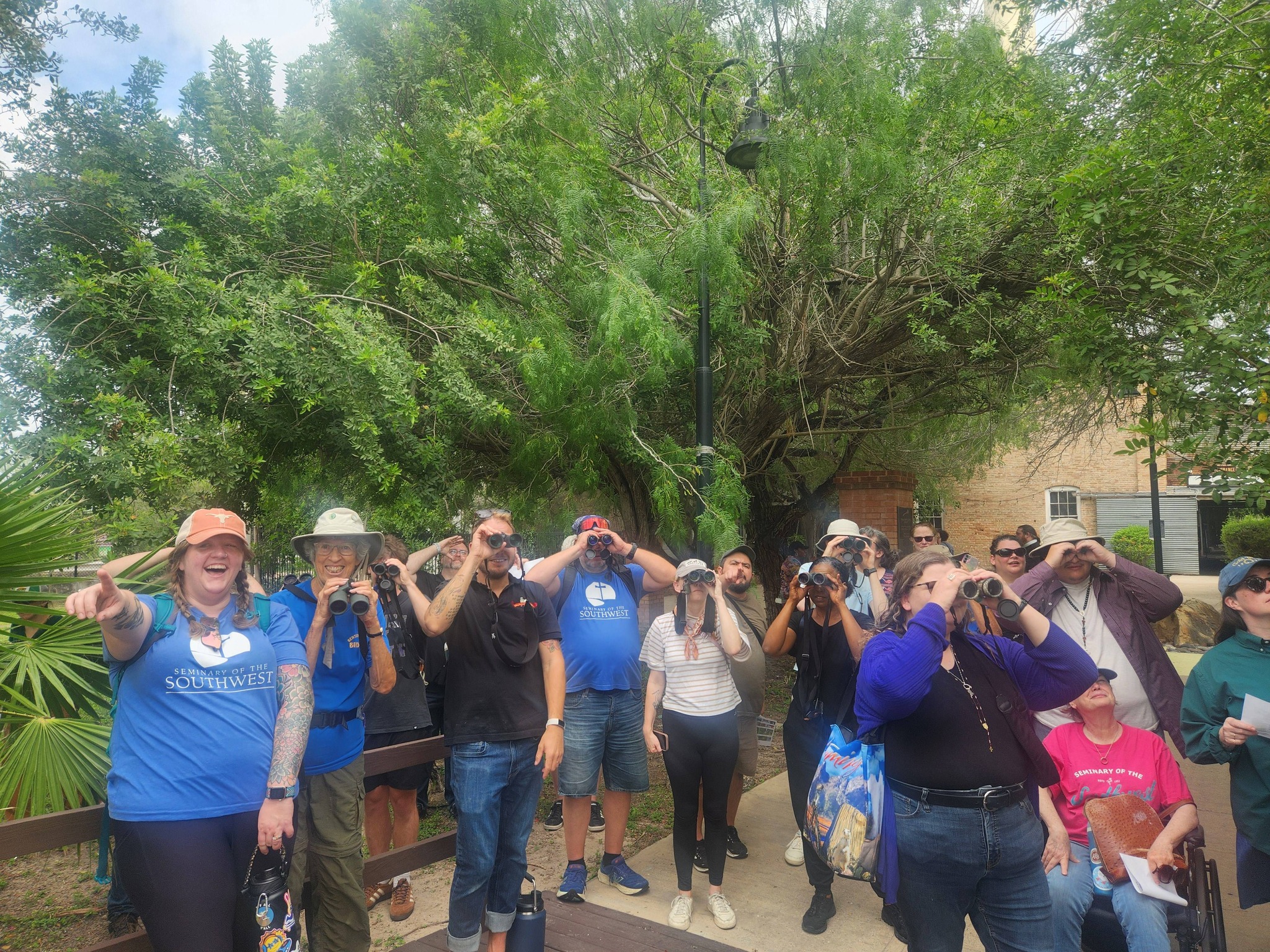
It has been a heavy week. We have witnessed profound suffering, listened to stories marked by loss, and felt the weight of systems that fail the most vulnerable so, it felt almost jarring to move from the pump house to birdwatching. Fun fact: McAllen is known as one of the top birding destinations in the country.
As we searched the trees and skies, the birds came crossing freely over the wall, back and forth without hesitation, and in my imagination they were almost defiant of the wall.
This holy disruption carried us into prayer.
Standing near the wall, gazing across at the discarded backpacks, clothing, and personal belongings left behind, we felt the weight of a question that would not let us go: How many lives have been lost in the pursuit of safety, and the so-called American dream?
So we sang.
We sang louder than we had all week, letting our prayer become a protest. We lifted our voices in the hymn “Profeta,” its words calling us to be bearers of truth and justice in a world that too often turns away. This was not a quiet prayer it was embodied, defiant, aching with hope. I found myself praying that these future clergy would have the courage not only to preach justice, but to live it! To stand in the tension, speak when it is costly, and to love when it is difficult.
From there, we made our way to the river.
At the water’s edge, we prayed again. A gentle wind rose and carried our voices across to the other side. Almost as if creation itself was joining in, refusing the divisions we insist upon, carrying prayer where we could not go.
That evening, we encountered another kind of witness.
We listened to the testimony of a woman whose life has been marked by unspeakable violence. And yet, she stood before us with steady, unwavering faith and declared, “God is good.” To believe in God after experiencing so much evil… we found ourselves without words.
Only awe.
God indeed is good.
And so the questions of Encuentro linger with us still: Where is God in the suffering? How do we hold onto life in the face of so much death? How do we choose love when hate feels easier even justified?
I pray that something in these days has taken root in the hearts of our students. I pray they are learning to recognize signs of hope in places that once felt like despair. That they will carry these stories as sacred callings. That their ministries will be shaped by what they have seen: a faith that refuses to look away, a hope that insists on life, and a love that crosses every border.
Encuentro: Finding God in the Borderlands — Day 4
Our journey has come to an end.
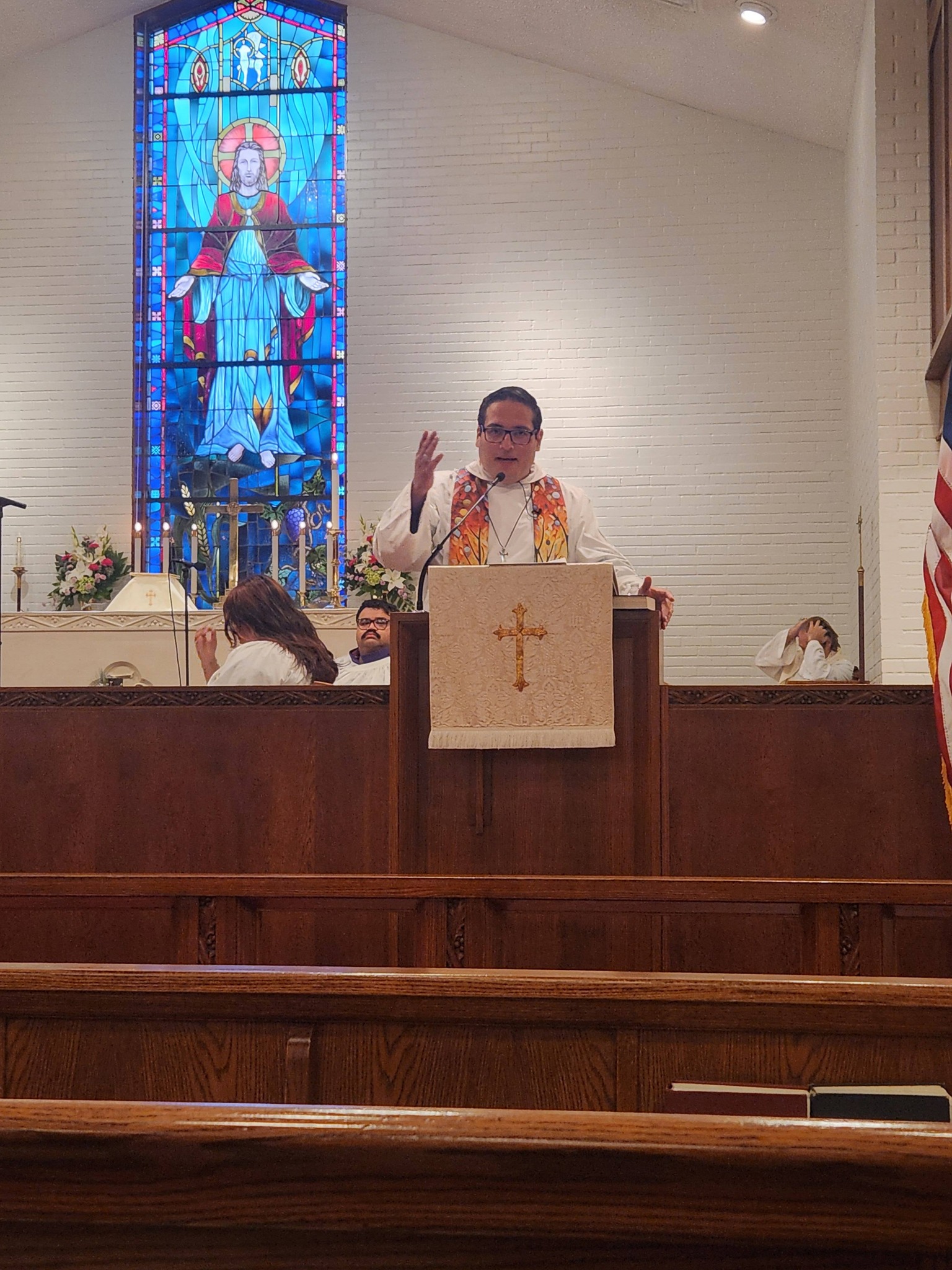
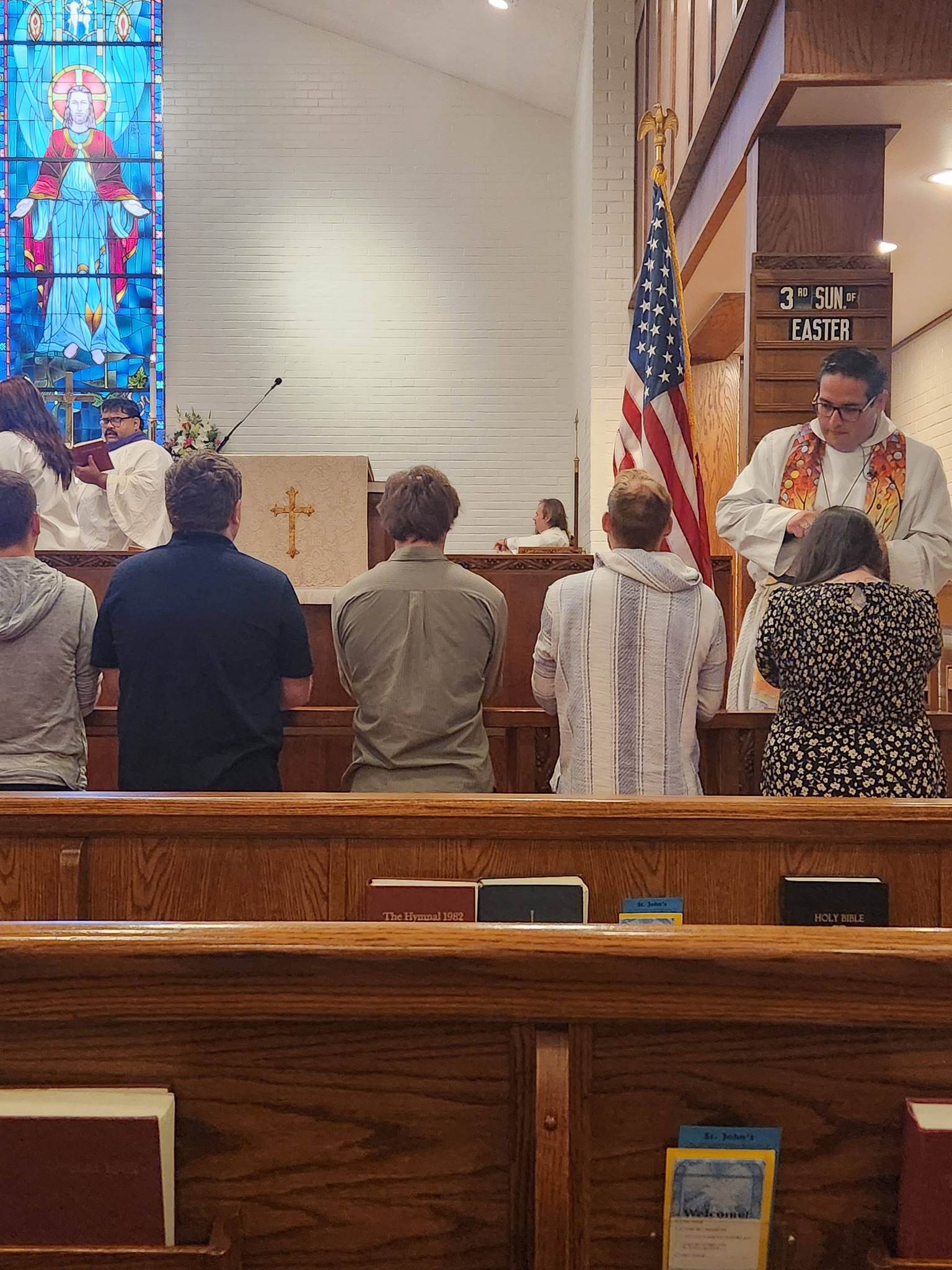
Before heading home, we gathered for worship, where Padre Cruz preached a top-notch sermon. (He must have had an incredible preaching professor). His sermon both comforted and challenged us: what we have witnessed here must now shape how we live and lead in the Church.
I leave tired and deeply grateful.
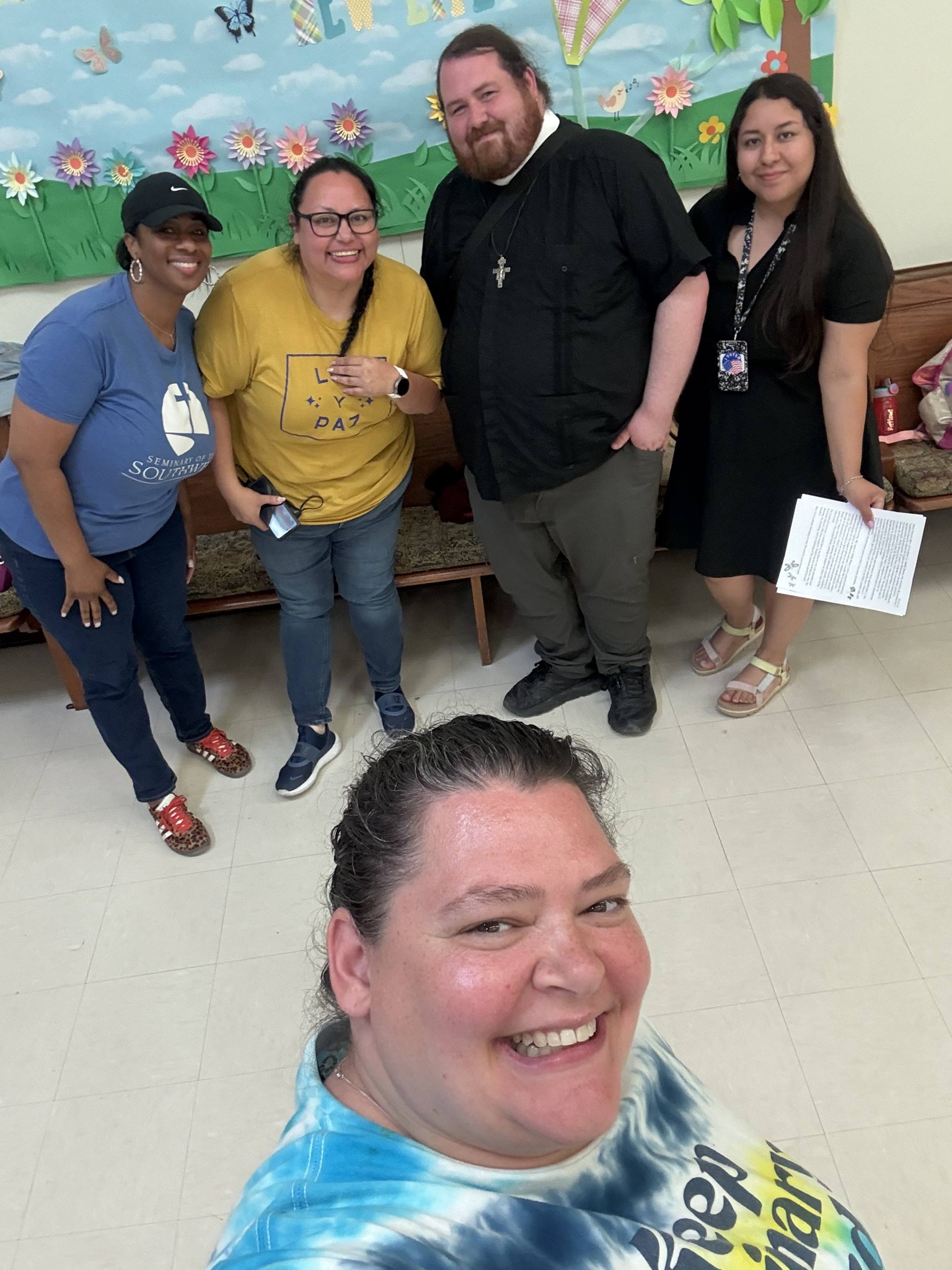
Grateful for my team—Dr. Dominique A. Robinson and Dean Sarah Mast, for their steady leadership and care. Grateful for our student leaders, Elizabeth Holland, James Haney, GA Whitehead, and Christina Allen, and for all my students, whose openness to this encuentro gives me hope that seeds for ministry with vulnerable communities have been planted.
I leave the border with a dream for the Church, that it would move toward the Borderlands, not away. Listening deeply to the stories of migrants and those who accompany them. Dream with me!
God is in the Borderlands.
The question is whether we, as the Church, will have the courage to meet God there.